

Why I Love Baseball

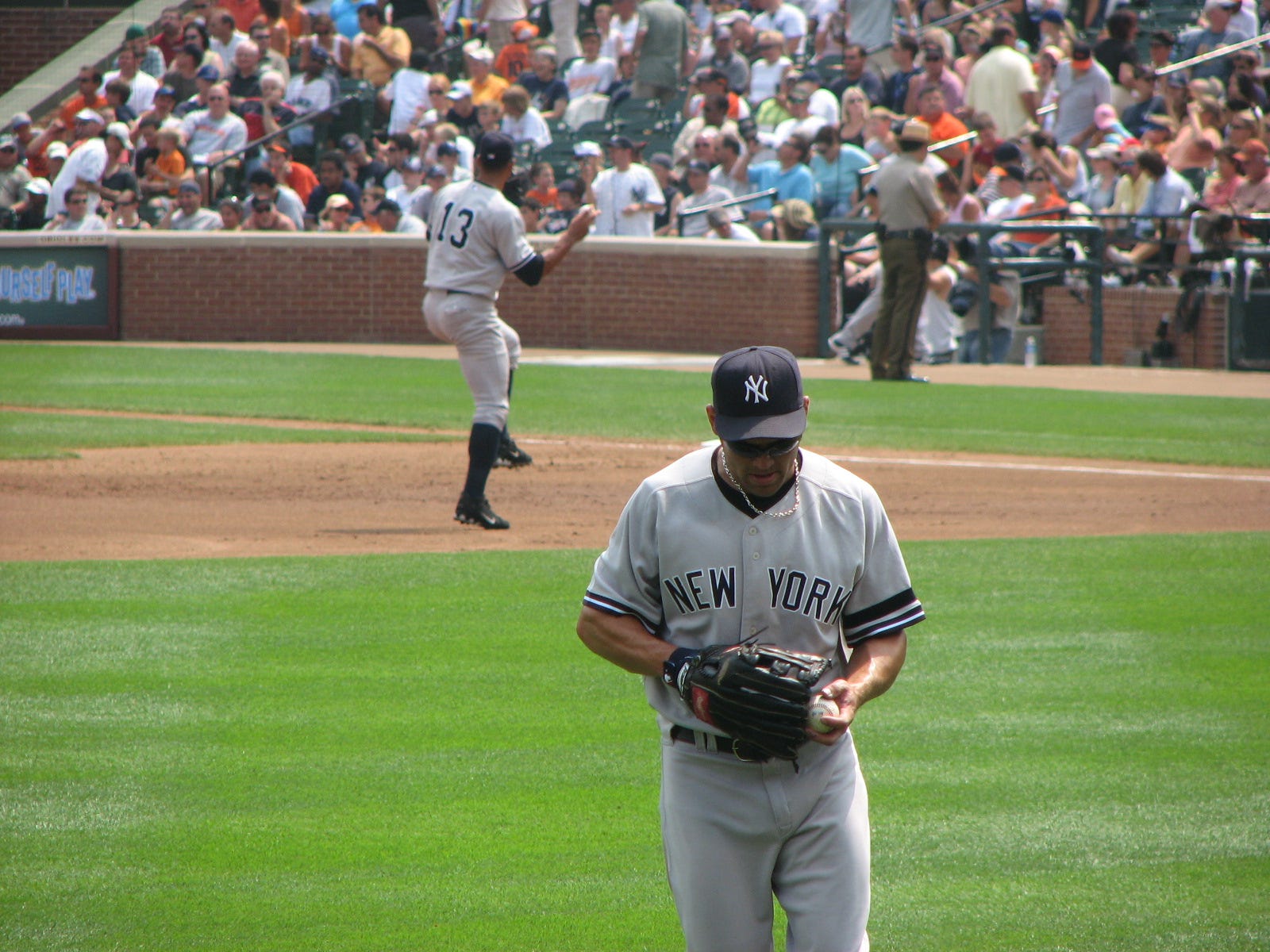
For some people, their entire personality is wrapped up in their politics, their religion, or their job. I find this troubling in many cases as human beings are so brilliant; why would we want to reduce ourselves to being so one-dimensional?
But some could make an argument that when it comes to baseball, I can be that way. I study it. I consume baseball content year-round. There’s a 60% chance my analogies in my business will be baseball-related.
I watch the first Spring Training game, I take off on Yankees Opening Day when they have an afternoon game, and I try my best to watch every Yankees regular season game, and every playoff game.
Baseball is very easily my favorite sport. Here’s why.
There’s a lot to Know
I often tell people that my favorite hobbies require depth of knowledge. I like cigars, and there are a lot of aspects to what makes a cigar good. I play the drums, where there are so many styles and genres of play. It’s easy to be a life-long learner on the drums. The same goes with fountain pens.
And it’s true with baseball too. There are so many players, teams, and games…the stats are endless. The game is constantly evolving; not just year over year, but game over game. Sometimes even pitch over pitch.
A casual observer would say all you’re doing is swinging a bat at a ball. But a true fan knows that there are a lot of mental gymnastics happening between each pitch.
The batter is figuring out, based on what the pitcher threw and how he reacted, what the next pitch might be. He has to commit to how and when he’s going to swing before the pitch is thrown.
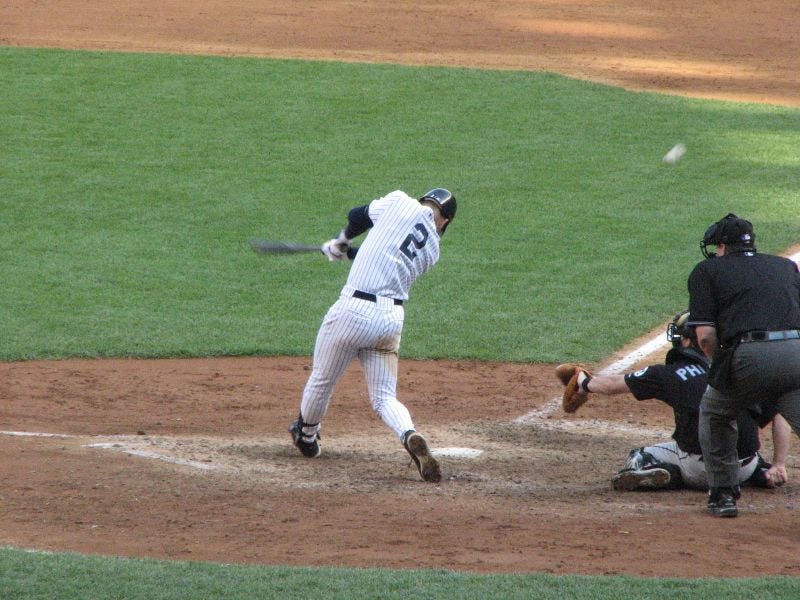
Hitting a baseball being thrown 100mph with a wooden bat is the hardest thing to do in sports. And the pitcher knows that. So…is he going to throw hard? Or slow it down and get the batter to swing well before the ball gets to the plate? Did he adjust the hitter’s eye level to look high so he can throw low? Is the batter a patient hitter, or a free swinger?
All of this happens in the 20 seconds between pitches. And that’s just one aspect of the game.
Baseball is a Combination of Short and Long Term Athleticism
Baseball is a long season. 162 games played over about 6 months. Plus 6 weeks of Spring Training. And if you’re lucky, 4-5 weeks of Postseason play.
There are about 20 off days baked in. 162 games over about 182 days. That’s a lot. And players have to stay healthy that entire time. That requires a different kind of stamina than you need for soccer, football, or basketball.
Some positions are more intense than others. There’s a reason starting pitchers only pitch every 5 days; they are involved in every play of the game, throwing 75-100 pitches when they’re on the mound. Catching is also physically intense. Infielders need incredible reaction time on hard-hit balls. And you need to cover a lot of ground in the outfield.
There was a time when guys played every game, every day, sometimes twice a day. What we saw Lou Gehrig and Cal Ripken Jr. do will almost definitely never be done again.
The average baseball career is shockingly short (as is the case in most sports); but the truly great players know how to keep their body in shape to play past 40.
Baseball IQ is a Real Thing
I also like that you need to be smart to play baseball1. Because there’s so much going on with every pitch, you need to be extremely situationally aware. Not just about pitches, but who’s on base, what to do based on how and when the ball is hit, and any number of factors and variables that affect each and every play.
For example, during the World Baseball Classic, we saw Aaron Judge throw out two guys trying to take third base on a fly ball2. They were not aware that he had such a strong, accurate arm.
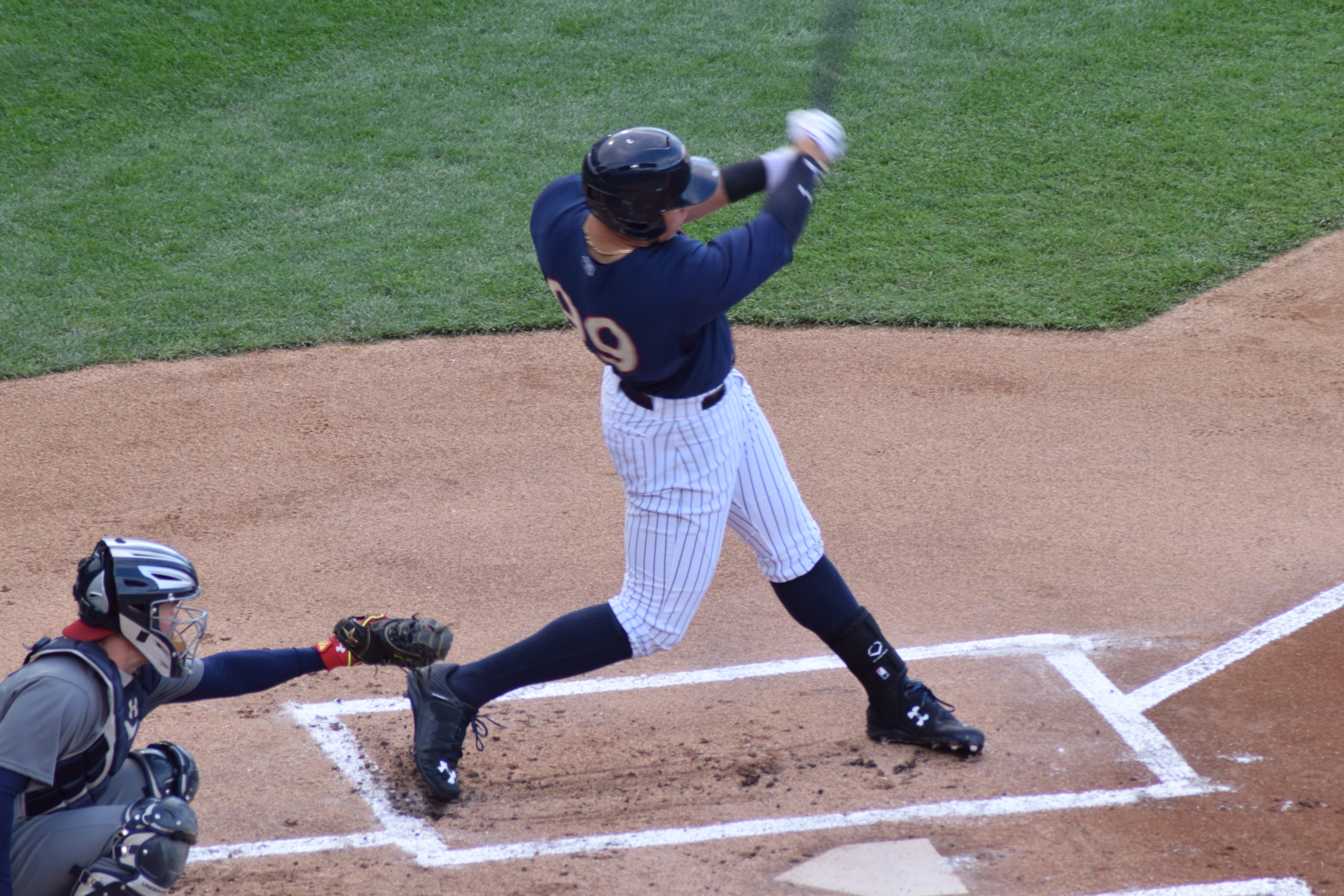
For most Right Fielders, those players (one being the speedy Fernando Tatis Jr.) would have been safe. But Aaron Judge is a different caliber of player, and it’s important for those runners to know that.
It’s a Great Combination of Analog and Digital
Finally, I love that, much like this publication, baseball is a great combination of the analog and the digital.
There are a LOT of stats. Sabermetrics (objective analysis of baseball stats) has transformed the game, getting popularized by the 2002 Oakland A’s.
Today in the MLB we’re seeing technology assist in player improvements, training, and on-field calls. This is the first year we’ll see ABS, the Automated Ball-Strike System; if a pitcher, catcher, or batter thinks the umpire called the ball wrong, they can challenge it.
In one very specific example, Giancarlo Stanton has become a much better pinch hitter thanks to advancements in pitching machines. Now they can simulate actual pitchers, so he can take simulated at-bats that are far, far more accurate.
This is important because the better you understand the release angle, the better chance you have of actually hitting the ball. And when Stanton actually hits the ball, it tends to go far.
But…it takes true physical strength to be a baseball player. You need to condition yourself in such a way that your body can handle hundreds of short bursts over a very long season. Games can be won or lost based on a single decision a player makes on the field.
You need to have gut instinct to be truly great. Games can also be won or lost based on a single decision the manager makes. Analytics help, but they aren’t everything. They can’t tell you how a particular player is feeling that day. They can’t tell you what the next situation will bring. Previous results do not predict future outcomes.
The teams that win the most deftly combine technology with gut instinct. They know how to use the tools they have…but more importantly, they know when to disregard them and trust their instinct.
Baseball is Back
October is my favorite month. It’s Autumn in the Northeast USA, which is the best. NFL football is happening. The Baseball Postseason is happening. It’s my birthday.
But there’s always a great sadness when the Yankees are done playing, and subsequently, when the World Series is over3.
March is the other side of that coin. Hope springs eternal, as they say. If October is what could have been, the new season is all that can be.
And I love that.
This isn’t necessarily unique to baseball, I know.
This is known as “tagging up.” Once an out is made, players on base can try to advance to the next base.
For a lot of my youth, those two things were synonymous. Not so much lately.