

The Case for Leaving Your Phone at Home
There was a time, not so long ago, where we weren't constantly connected. And we were fine.

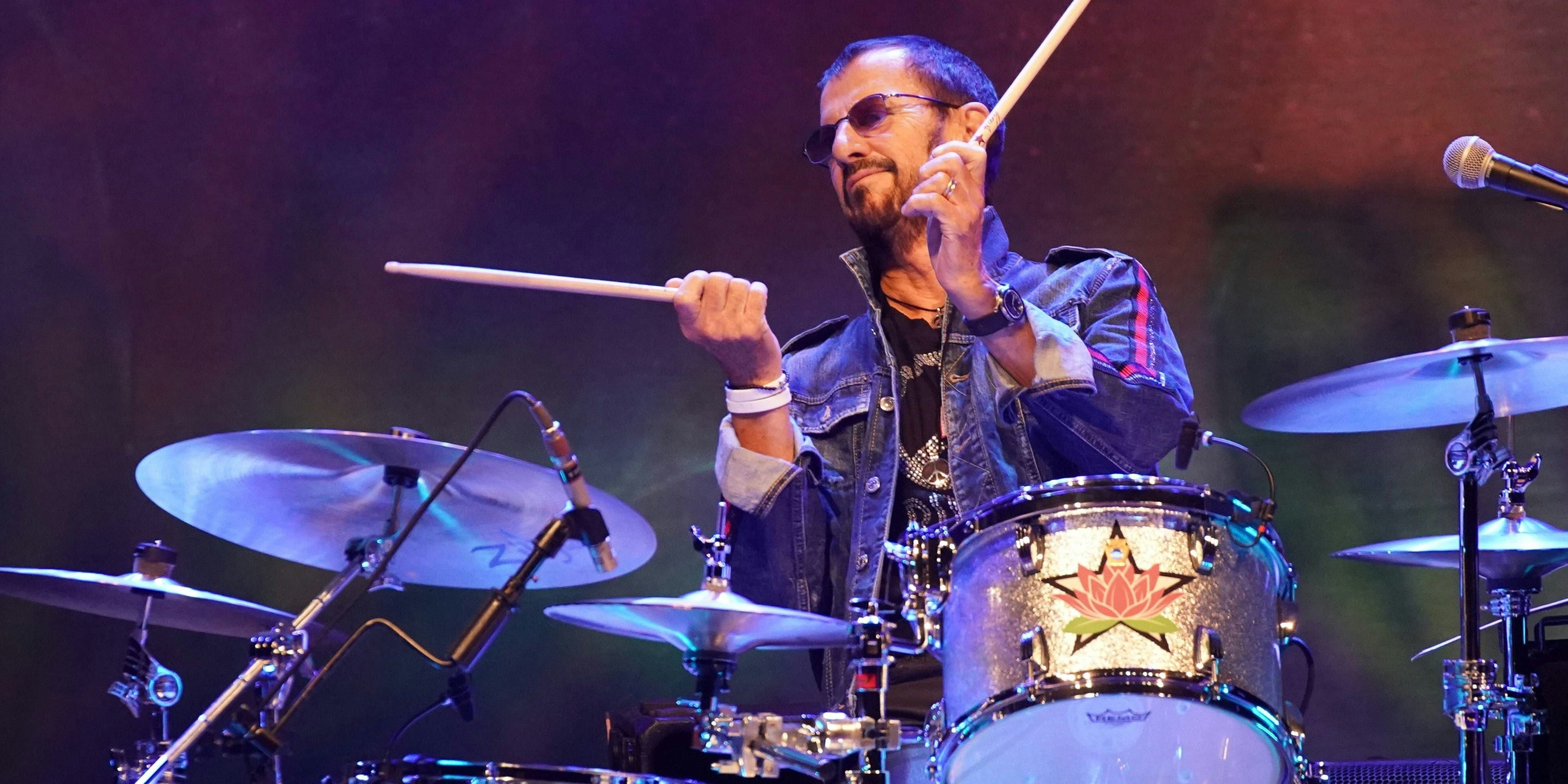
Ringo Starr is perhaps one of the greatest drummers of all time. I’d argue he’s perhaps the most influential rock drummer of the 20th century.
He also teaches one of my favorite courses on MasterClass, Drumming and Creative Collaboration. In it, he tells a story that has stuck with me for several years.
He was doing a gig with His All-Starr Band — a group of guys with true music bona fides — when the monitors went out.
If you don’t know, the monitors are what musicians (or anyone using a mic) use, either in their ears or with speakers facing them, so they can hear how they, and everyone else, sounds.
Many of the band members said they couldn’t go on with the monitors out. It was technology that they relied on. Then Ringo said:
And I said, come on...even the Beatles, we didn’t have monitors and huge speakers. We had the house PA at Shea Stadium...
He pointed out that The Beatles, one of the greatest bands in the world, didn’t use monitors...they just didn’t have them. And they still put on amazing shows. He goes on to say:
And we did the gig. And...everyone said, oh man, that was great.
They realized they didn’t need this technology that they always used once someone pointed out there was a time where it didn’t exist.

Leaving my Phone at Home
I recently posted on LinkedIn that one of my goals for The Year of Digital Detox was to leave my phone at home more often.
There were comments about getting lost or needing it. One stood out to me: “I don’t know if I could just leave my phone at home. It was drilled into me to keep it on me at all times when I first got it.”
My response was very similar to Ringo’s. Cellphones were invented within my lifetime. Throughout my entire childhood, I lived without having a phone on me.
You had to leave the house without your phone because you couldn’t bring it with you.
Now, we’ve been told we need to keep it on us at all times.
I challenge that.
Are Phones that Convenient?
I get why people think that. “What if someone needs to get a hold of me?” “What if I get lost?”
What if I miss something?
These are all insecurities or misgivings.
For one, I totally get the fear of getting lost. If you’re going on a long trip, GPS is far superior to paper maps for lots of reasons.
But if you’re going on a short trip, or driving around town, you’re not going to get truly lost. And if you are, you can do the old fashioned thing: ask for directions.
As for the other questions...
What if Someone Needs Me?
We’re far from the days where a man would go to a bar and wait for the call that his wife gave birth. You should be there for the birth of you child, so that’s a situation where someone actually needs to get a hold of you.
But here’s the thing: unless you’re a head of state, or your immediate decision can affect hundreds or thousands of people, there are very few times in our lives when that situation arises. And there’s a very simple solution.
Before you leave your phone at home, tell people how to get a hold of you if they need you. Tell them who you’ll be with. Tell them where you’ll be. Then, if someone truly needs you, they’ll know where to find you.
If you’re going for a 20 minute walk, guess what: pretty much everything can wait 20 minutes1.
My brothers and I leave our phones off when we go to the movies. We tell our parents and each other when we do that. After all, what’s the point of paying $20 to see a movie in a theater if you’re not going to pay attention to it?
What if I Miss Something?
This is really similar to the question of if someone needs to get a hold of you. It’s probably the root of that question.
FOMO is a very strong motivator. Social Media companies rely heavily on it to keep their users addicted. News Organizations rely on it with their not-really-breaking news and clickbait headlines.
But if you’re constantly attached to your phone, you are missing something. You’re missing what’s right in front of you. You’re sacrificing real world experience for digital information overload.
When I was at Disney World, we had a strictly no phone/tablet policy. I used a device called The Brick to lock my phone and used it only for the Disney World app and coordinating plans with my brother and his girlfriend2.
While we were at lunch at Beast’s Castle, my kids were floored by the setting. It’s an exact replica of the castle you see in the movie, with Beast coming in every 30 or so minutes to say hello to those dining with him.
The family of 4 next to us, with kids similarly aged to mine, were all on devices. The parents on their phones. The kids on tablets. They were squandering a unique experience because they couldn’t put down their devices.
“What’s the point of even being here,” I said to my wife. The phones were making them miss something — not preventing them from missing something.
I’m at Fault Too
I’m not going to act like some self-righteous Luddite who’s given up his phone. I’m far from that.
Part of what gives me the confidence to leave my phone at home is my watch, which can also get calls, send texts, and play music. I’d like to get to a point where I can leave both at home for short walks, at least.
While I love listening to music or podcasts on walks, I’m trying to embrace silence more.
I recognize that day-to-day, the phone has become an important tool. When my wife is at work, for example, my kids’ school may need to get a hold of me.
And there are invariably times when I’m distracted by a text, an email, or a news story. I try to remind myself to be better next time; whatever is on my screen is not as important as what’s happening right in front of me, in real life.
You Don’t Always Need It
Just like Ringo and His All-Starr Band likely continued to use their monitors in subsequent shows, we can and should use our phones as what they are: helpful tools that make our lives easier.
I’m not saying give up your phone completely. I’m not saying always leave it at home. I will still use GPS. I’ll still use it for work. I’ll still check my email3.
What I am saying is that it’s misguided to think it impossible to be without your phone for periods of time.
Ringo opens that video by saying this:
I love playing live. I mean, that’s what it’s all about for me. You know, it’s, that’s the gig. You know, if you want to connect with an audience, you’ve got to love them...There’s a magic moment when the band and the audience are just on.
Being there live, in the moment, with the audience. There’s nothing better.
I challenge you, some time in the next week, to pick a time to go on a 20 minute walk without your phone. Or run to the store without it. If you’re really worried that you’ll miss something, tell a friend or family member how to get a hold of you (as in, tell them where you’ll be).
Then see how you feel afterward. It’s incredibly liberating for me. I’m more present; I’m not worried about every ding on my phone; my watch, separated from my phone, gets virtually no notifications. I also put it in Do Not Disturb mode.
I’m not concerned with capturing the moment on film. I’m actually living in the moment.
I trust you’ll feel the same way.
If your spouse is imminently going to give birth, by all means, bring the phone with you.
I did some occasional reading if the kids were napping, my wife and oldest were off somewhere, and I was on my own.
Though I’m working towards only having personal email on it, not work-related email.